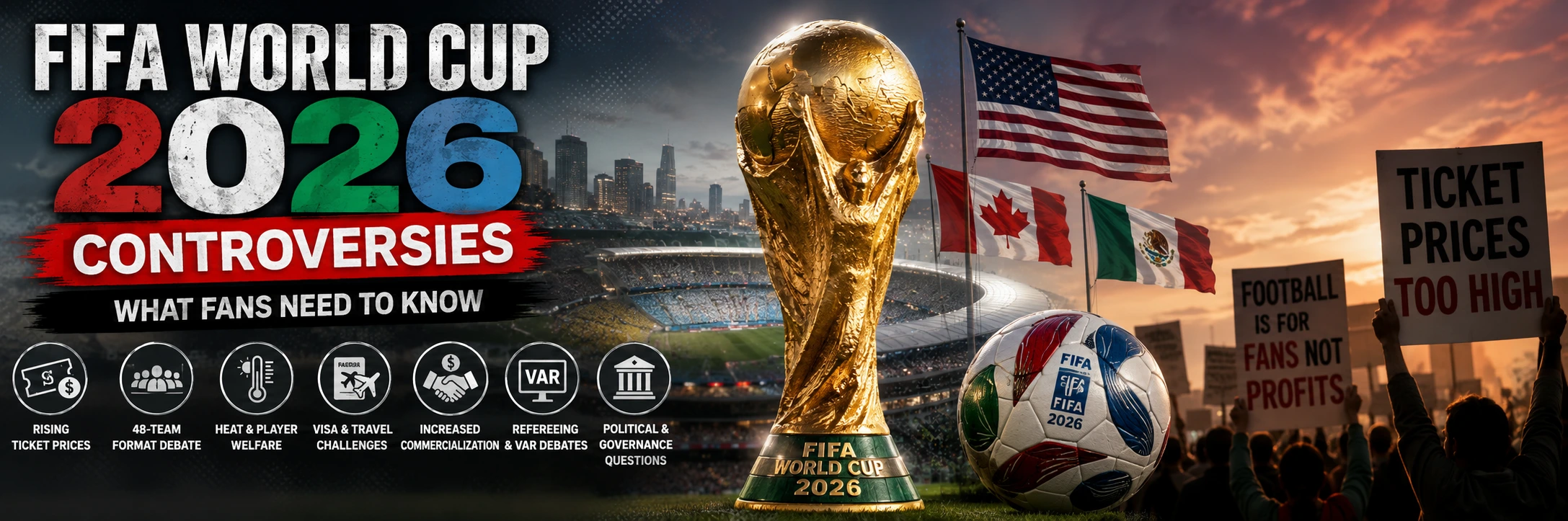
FIFA World Cup 2026 Controversies: What Fans Need to Know
Posted on |
FIFA World Cup 2026 Controversies: What Fans Need to Know
The FIFA World Cup 2026 is set to be one of the most ambitious sporting events in history. Hosted across the United States, Canada, and Mexico, the tournament marks several major firsts, including an expanded 48-team format and a record number of matches. While excitement continues to build among football fans worldwide, the road to the tournament has not been free from criticism.
From ticket pricing concerns to debates about player welfare, FIFA 2026 has already generated significant discussion across the football community. Here are some of the biggest controversies that have emerged so far.
Rising Ticket Prices Leave Fans Frustrated
One of the most talked-about issues surrounding the FIFA World Cup 2026 is the cost of attending matches. Many fans have expressed concerns over increasing ticket prices and the use of dynamic pricing models. Under this system, ticket costs can rise based on demand, making high-profile matches significantly more expensive. Supporters argue that football should remain accessible to everyday fans rather than becoming an experience reserved primarily for those who can afford premium pricing.
The Debate Around the Expanded 48-Team Format
For the first time in World Cup history, 48 national teams will participate in the tournament instead of the traditional 32. FIFA believes the expansion will provide more countries with an opportunity to compete on the world’s biggest stage. However, critics have questioned whether the larger format could dilute the quality of competition. Some football analysts also worry about scheduling complexities, increased travel demands, and a longer tournament calendar.
Heat Concerns and Player Welfare
Several host cities are expected to experience high temperatures during the tournament period. This has sparked concerns among players, coaches, and sports scientists regarding athlete safety and performance. While FIFA has introduced measures such as cooling breaks and hydration protocols, some experts believe additional precautions may be necessary to ensure player welfare throughout the competition.
Visa and Travel Challenges for International Fans
With matches spread across three countries, international travel logistics have become another point of discussion. Fans from certain regions have voiced concerns about visa processing times and travel requirements. Given the global nature of the World Cup, many supporters believe smoother entry procedures will be essential to creating an inclusive tournament experience.
Increased Commercialization of Football
FIFA has faced criticism over what some observers describe as the growing commercialization of the sport. Critics argue that sponsorships, hospitality packages, premium experiences, and revenue-focused initiatives have become increasingly prominent. While commercial partnerships help fund major tournaments, some fans feel that the traditional spirit of football risks being overshadowed by business interests.
Refereeing and VAR Discussions Continue
No major football tournament is complete without debates about refereeing decisions. Even before the tournament begins, discussions around VAR protocols, disciplinary rules, and officiating consistency remain active topics within the football community. Many supporters hope FIFA will continue refining its officiating systems to improve transparency and reduce controversy during crucial matches.
Political and Governance Questions
As with many global sporting events, the FIFA World Cup 2026 has also attracted scrutiny regarding governance and political influence. Discussions surrounding decision-making processes, leadership policies, and relationships with host governments continue to generate debate among football stakeholders. These conversations highlight the challenges of organizing an event that brings together nations, governments, sponsors, players, and billions of viewers worldwide.
What These Controversies Mean for FIFA 2026
Despite the criticism, anticipation for the FIFA World Cup 2026 remains incredibly high. The tournament promises historic moments, new opportunities for emerging football nations, and one of the largest global sporting audiences ever assembled. Many of the controversies reflect the growing scale and complexity of modern football. As preparations continue, FIFA will face increasing pressure to address fan concerns while delivering a successful and memorable World Cup experience.
In a Nutshell
The FIFA World Cup has always been about more than just football. It is a global event that sparks conversations about sports, business, politics, technology, and culture. The controversies surrounding FIFA 2026 demonstrate how closely fans and stakeholders are watching every aspect of the tournament.
Whether these concerns ultimately impact the competition remains to be seen, but they have already become an important part of the story leading up to football’s biggest stage.